

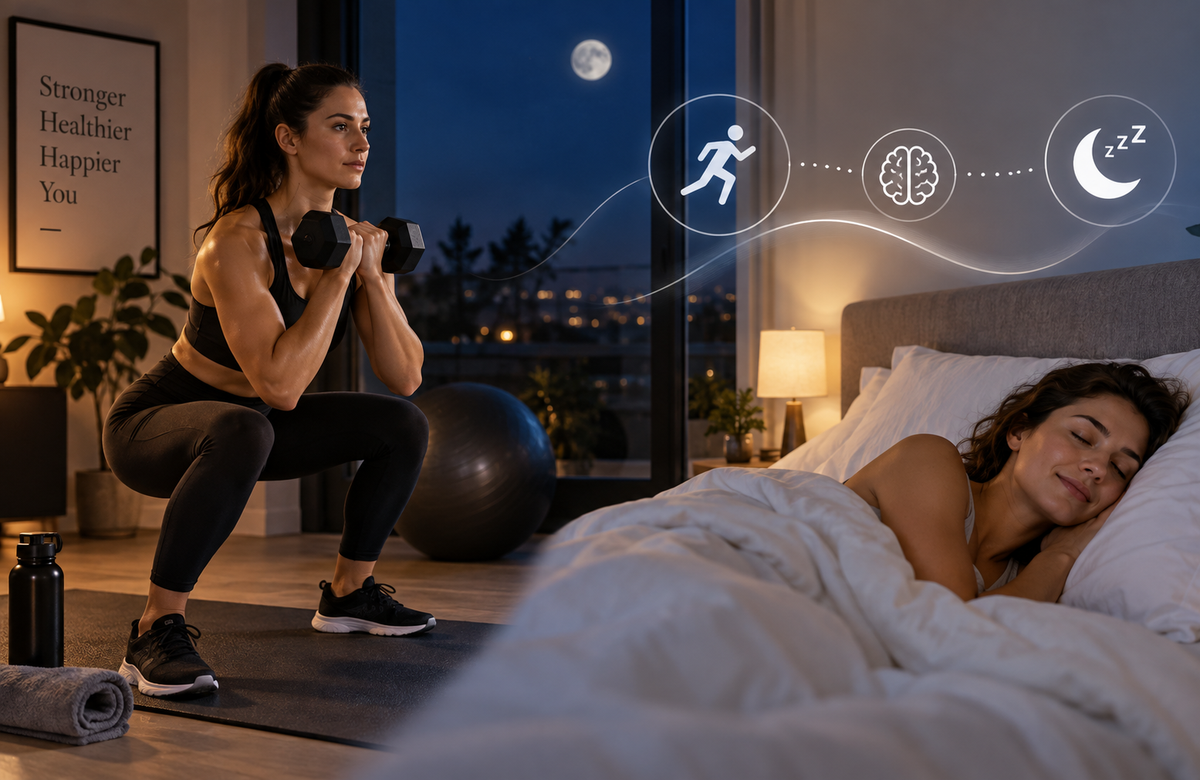
It's one of the most stubborn myths in the fitness world: 'evening exercise = sleepless nights.' The reality, however, is more nuanced. A 2022 meta-analysis examining 23 studies on healthy adults concluded that moderate evening exercise, completed at least one hour before bedtime, does not impair sleep, and in many cases improves deep sleep (N3 phase) compared to days without training.
What Happens to Your Body in the Evening
During intense exercise, the body releases cortisol and adrenaline that keep the brain and muscles on alert, and core body temperature rises by 1-2°C. To fall asleep, the body needs to lower its core temperature, and this process takes 60-90 minutes. If you go to bed before the body has cooled down, falling asleep becomes harder and deep sleep is reduced.
Another often-overlooked factor: bright gym lights inhibit melatonin production. Training in brightly lit environments after 9 PM can delay sleep onset by 30-60 minutes.
How Long Before Sleep Should You Stop Training
|
Workout type |
Minimum recommended gap |
|
High intensity: HIIT, running, spinning, boxing |
⏰ 3-4 hours before |
|
Moderate intensity: gym, cycling, swimming |
⏰ 1.5-2 hours before |
|
Low intensity: yoga, walking, pilates |
⏰ 60 minutes before |
|
Active recovery: stretching, breathwork |
⏰ Even 30 minutes before |
The Surprising Side: Evening Sport Can Help You Sleep Better
Physically active people fall asleep faster and spend more time in deep sleep than sedentary people, regardless of workout timing. Physical activity stimulates serotonin production, which is the precursor to melatonin: over time, those who train regularly naturally produce more melatonin in the evening. The key is consistency and respecting the timing of each individual session.
|
Your mattress also affects nighttime recovery. Athletes accumulate muscle tension that, on an inadequate surface, translates into morning stiffness. The MagniStretch mattress was designed with proprietary clinical studies to promote spinal decompression during sleep. Those who sweat at night after training may find relief in MagniCool, with a structure that dissipates heat 3x faster. |
FAQ
Does working out at night really hurt your sleep?
Not always. Moderate evening exercise, completed at least 1.5 hours before bedtime, does not disrupt sleep. The problem only arises with high-intensity training in the 60 minutes before sleep.
How long before sleep should I stop training?
It depends on intensity: 3-4 hours for HIIT and intense sports, 1.5-2 hours for moderate activity, 60 minutes for yoga and walking. Stretching can be done as little as 30 minutes before bed.
Why do I struggle to fall asleep after an evening workout?
Cortisol, adrenaline and high body temperature keep the nervous system alert. Give your body at least 90 minutes to cool down before going to bed, and prefer dim lighting after training to avoid inhibiting melatonin

